Secret Weapons: Technology, Science and the Race to Win World War II

Secret Weapons: Technology, Science and the Race to Win World War II

Description


Powerful illustrations and a unique new narrative make this an incomparable illustrated history of the secret weapons that changed the course of World War II. The book's basic structure is chronological, charting the race in technology between the Allied and Axis powers, with examples of their use in battle, along with those that remained experimental or remained the stuff of science fiction.

Importantly (and of interest to the general reader) it also shows how wartime research anticipated the high-tech era in which we now live. The account charts secret weapons development from the Japanese ray gun of the 1930s to the powerful V2 rocket, and compares World War II secret weapons research with the realities of present-day science.

It's a riveting story of innovation under pressure, from a world of machine guns and biplanes to electronics, rockets, and nuclear bombs with the power to wipe out humanity.

About the Author


Brian J Ford is a prolific research scientist who launched major science programms for the BBC. His books pioneer new approaches in bringing science to the public. Over 100 editions of his books have been published around the world, and he appears in TV programmes produced in studios ranging from Hollywood to Delhi, and from Germany to Japan.

He was a NESTA Fellow 2004-2007, was presented with the inaugural Köhler medal in America for his work in microscopy, and has been nominated for the prestigious Faraday Medal of the Royal Society in London. His work is widely reported and discussed in journals including Scientific American, Nature, New Scientist, The Microscope and the British Medical Journal; his discoveries feature in many text-books and CD-ROMs.

In addition to textbooks he has also written the popular 101 Questions about Science books. His First Encyclopaedia of Science (for the pre-teens) sold over 70,000 copies in a month. Brian J Ford contributes to The Guardian, The Daily Telegraph and The Times.


Product DetailsISBN-10: 1849083908
ISBN-13: 9781849083904
Published: Osprey Publishing, 09/20/2011
Pages: 304
Language: English

Allies Wanted To Turn Hitler Into A Woman
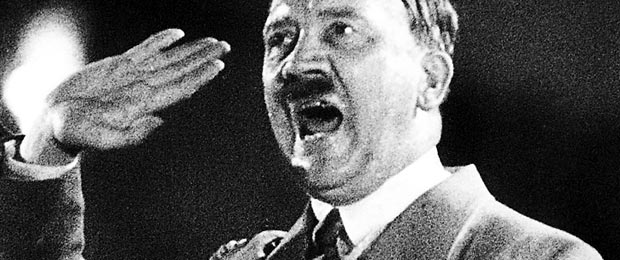
Not entirely turn him into a woman of course, but a new book by Professor Brian Ford from Cardiff University details some bizarre plans that the allies had for dealing with the Führer.

Secret Weapons: Technology, Science And The Race To Win World War II. The title alone makes me want to go out and buy the book. According to the author:

“There was an allied plan that they would smuggle oestrogen into Hitler’s food and change his sex so he would become more feminine and less aggressive.

“Their research had showed the importance of sex hormones – they were beginning to be used in sex therapy in London.

“The plan was to give sex hormones to Hitler and counterbalance his unnecessary aggression.”

So no, the allies did not plan on storming into a German bunker, dragging Hitler out and forcefully putting a dress and makeup on him. This was a plan to lace Hitler’s food with estrogen, in efforts to bend his out of control aggressiveness. Which if you really think about it, MIGHT have worked on Hitler. We all know that high levels of estrogen has been found in the food that sent out to prisons across the United States, in efforts to control the aggressive male prisoners. But would that plan have really worked on someone as deranged as Hitler?

Full source: Wales Online UK

Bizarre plans hatched by the allies to win the second world war have been revealed for the first time – including a plot to turn Hitler into a woman.

Allies thought by smuggling female sex hormones into the fuhrer’s food they could turn him into a woman and curb his aggressive impulses.

The plot was just one of a number of wacky schemes cooked up to break the war’s stalemate, according to a new book by a Welsh-based author.

Others included dropping glue on Nazi troops in an attempt to stick them to the ground, as well as creating bombs made to look like everyday tins of fruit and chocolate.

The hare-brained schemes are revealed for the first time in a new book called Secret Weapons: Technology, Science And The Race To Win World War II.

They have come to light now because of the publication of new documents not previously seen because of their sensitive nature.

The book is authored by Professor Brian Ford, a fellow at Cardiff University and pioneer of popular science.

He said the allies were deadly serious about turning the evil Austrian transgender – to be more like his placid sister Paula.

Professor Ford said: “There was an allied plan that they would smuggle oestrogen into Hitler’s food and change his sex so he would become more feminine and less aggressive.

“Their research had showed the importance of sex hormones – they were beginning to be used in sex therapy in London.

“The plan was to give sex hormones to Hitler and counterbalance his unnecessary aggression.”

Professor Ford said the plan was perfectly plausible because British spies were in place to lace his food with the hormones and it would have avoided detection for months.

“In fact it was found there were agents who would be able to get it into his food,” he said.

“It would have been entirely possible.

“He had testers who used to taste his food. There was no mileage to putting poison in his food because they would immediately fall victim to it.

“Sex hormones were a different matter. They only affected you if you took them for weeks or months on end so no-one would have realised the hormones were in the food.”

And Hitler’s sex change was not the only trick they had up their sleeve.

Another tactic saw allies draw up plans to drop boxes of poisonous snakes on the enemy, while they also spent fortunes developing a calamitous explosive-laden cart for an assault on Normandy – called the Great Panjandrum.


China denies Pakistan gave it helicopter access


BEIJING (AP) — China has rejected media reports that Pakistan gave it access to a radar-evading helicopter that crashed during the U.S. mission to kill Osama bin Laden, calling them "preposterous."
The international business newspaper Financial Times reported Sunday that Pakistan allowed Chinese military engineers to photograph and take samples of the stealth chopper before giving it back to the U.S.
In its first public response, China's Defense Ministry said in a one-line statement late Tuesday, "This report is baseless and preposterous."
The U.S. suspects that Pakistan shared the technology with China in retaliation for its May 2 raid that killed bin Laden on Pakistani soil, humiliating Islamabad.
A Pakistani official has denied the charge, saying Pakistan was aware the U.S. had bin Laden's compound and the helicopter wreckage under round-the-clock surveillance after the raid, so it would know whether foreign technical experts had examined it.
The helicopter was one of two modified Black Hawks that defense experts said evidently used radar-evading technology plus noise and heat suppression devices to slip across the Afghan-Pakistan border, avoid detection by Pakistani air defenses and deliver two dozen Navy SEALs into the hiding place of the al-Qaida leader.
One of the choppers crash-landed during the mission. Before leaving with bin Laden's corpse, commandos blew up the main body of the chopper, apparently to keep its stealth components secret.
Photos of the wreckage with the tail still visible flashed around the world, drawing immediate chatter among defense experts who noticed it appeared to have previously undisclosed technology.
The relationship between the U.S. and Pakistan took a nose dive after the bin Laden raid, which prompted celebrations in the U.S. but anger and embarrassment in Islamabad. Ties were already strained despite billions of dollars in American aid over the last decade because of Pakistan's reluctance to target Taliban militants on its territory who stage cross-border attacks against NATO troops in Afghanistan.
In contrast to the fickle Washington relations, Pakistan calls its relationship with China an "all-weather friendship." China provides Pakistan with aid and investment, while Pakistan offers Beijing diplomatic backing, including among Islamic nations who might otherwise criticize China's handling of its Muslim Uighur (pronounced WEE'-gur) minority.
The two also both distrust India. China fought India in a brief but bloody 1962 border war, and Pakistan has fought its neighbor three times since 1947.

U.S. suspects Pakistan let China visit stealth chopper


By the CNN Wire Staff
August 15, 2011 -- Updated 1831 GMT (0231 HKT)
News reports suggest Pakistan may have allowed China to examine the U.S. helicopter downed during the bin Laden raid.
STORY HIGHLIGHTS
  • U.S. official: "We have strong suspicions"
  • Pakistani official: The suggestion is "unsubstantiated and false"
  • Tensions between the U.S. and Pakistan were stoked by the secret U.S. raid

Washington (CNN) -- The United States is concerned that Pakistan may have given China access to the helicopter that crashed in the U.S. raid on Osama bin Laden's compound, a U.S. official said Monday.

"We have reason to suspect China was given access but we cannot confirm it definitively," said a U.S. official who is not authorized to discuss intelligence matters publicly. "We have strong suspicions."

The comment came after news reports suggested Pakistani authorities may have allowed Chinese engineers to see the stealth aircraft.

A senior Pakistani intelligence official denied that ever happened. "This story is unsubstantiated and false," said the official, who asked not to be named because he is not authorized to speak to the media.

"Such stories are counterproductive when it comes to U.S.-Pakistani relations," the official added.

There was no answer Monday when CNN called the Chinese Embassy in Washington, and embassy officials did not immediately respond to an e-mail requesting comment.

The Financial Times newspaper in London reported that it had learned that "Pakistan allowed Chinese military engineers to photograph and take samples from the top-secret stealth helicopter." It added that "people close to the White House and the Central Intelligence Agency" told the paper that "the Chinese were in fact given access to the helicopter." China declined to comment, the article said.

The New York Times reported that "Pakistan's intelligence service probably allowed Chinese military engineers to examine the wreckage," citing "American officials and others familiar with the classified intelligence assessments." It noted that the "American assessments were disclosed" by The Financial Times.

When the aircraft crashed during the raid that killed the al Qaeda leader in May, Navy SEALs destroyed most of it to protect the technology. But the tail section remained mostly intact and it was that area that the Chinese engineers examined, according to the New York Times report.

Both newspapers pointed out that China and Pakistan enjoy a longstanding military relationship.

The raid at the beginning of May that killed bin Laden, staged without informing the Pakistani government, stoked tensions between the United States and Pakistan.

In July, the United States said it was withholding $800 million in aid to Pakistan.

"They've taken some steps that have given us reason to pause on some of the aid which we're giving to the military, and we're trying to work through that," White House Chief of Staff William Daley said at the time.

Pakistan let China see "stealth" chopper from bin Laden raid


Pakistan gave China access to the "stealth" helicopter that crashed during the commando raid that killed Osama bin Laden in May despite explicit requests from the CIA not to, the Financial Times reported on Sunday.

During the raid, one of two modified Blackhawk helicopters, believed to employ unknown stealth capability, malfunctioned and crashed, forcing the commandos to abandon it. See GlobalPost: Navy SEALs had "kill" order on Osama bin Laden, report claims

"The US now has information that Pakistan, particularly the ISI, gave access to the Chinese military to the downed helicopter in Abbottabad," the paper quoted a person "in intelligence circles" as saying.


Pakistan let China see downed US chopper: report

Updated August 15, 2011 08:35:12

Map Data - Terms of Use
Map
MAP: Pakistan

Pakistan gave China access to the previously unknown "stealth" helicopter that crashed during the commando raid that killed Osama bin Laden in May, despite explicit requests from the CIA not to, according to a British newspaper.

The revelation, if confirmed, is likely to further shake the United States-Pakistan relationship, which has been improving slightly after hitting its lowest point in decades following the May 2 bin Laden raid.

During the raid, one of two modified Blackhawk helicopters, believed to employ unknown stealth capability, malfunctioned and crashed, forcing the commandos to abandon it.

"The US now has information that Pakistan, particularly the ISI (Inter-Services Intelligence Directorate), gave access to the Chinese military to the downed helicopter in Abbottabad," London's Financial Times newspaper quoted a person "in intelligence circles" as saying.

Pakistan, which enjoys a close relationship with China, allowed Chinese intelligence officials to take pictures of the crashed chopper as well as take samples of its special "skin" that allowed the American raid to evade Pakistani radar, the newspaper reported.


Image: Part of a damaged helicopter is seen lying near the compound where al-Qaeda leader Osama bin Laden was killed in Abbottabad

No one from the Pakistani army was available for comment, but the ISI, Pakistan's top spy agency, denied the report. The paper said Pakistan's top general, chief of army staff Ashfaq Kayani, denied that China had been given access.

The surviving tail section, photos of which were widely distributed on the internet, was returned to the US following a trip by US senator John Kerry in May, a spokesman for the US said.

Shortly after the raid, Pakistan hinted that it might give China access to the downed chopper, given its fury over the raid, which it considers a grievous violation of its sovereignty.

"We had explicitly asked the Pakistanis in the immediate aftermath of the raid not to let anyone have access to the damaged remains of the helicopter," the Financial Times quoted the source as saying.

In an incident such as the helicopter crash, it is standard American procedure to destroy sophisticated technology such as encrypted communications and navigation computers.

Pakistan is a strategic ally to the US but the relationship has been on a downward spiral since the killing of the al Qaeda leader in the raid by US forces.

Islamabad was not informed in advance and responded by cutting back on US trainers in the country and placing limits on CIA activities there.

The fact that the al Qaeda chief lived for years near the Pakistani army's main academy in the north-western garrison town of Abbottabad reinforced suspicions in Washington about Islamabad's reliability in the war against militant Islamists.

There are also growing frustrations with Pakistan over its reluctance to mount offensives against militant factions who are fighting US-led foreign forces across the border in Afghanistan.

In a show of displeasure over Pakistan's cutback in US trainers, its limits on visas for US personnel and other bilateral irritants, the United States recently suspended about a third of its $US2.7 billion ($2.6 million) annual defence aid to Pakistan.

Despite this, both sides have tried to prevent a breakdown of relations.

The head of Pakistan's powerful ISI, Lieutenant-General Ahmad Shuja Pasha, visited the US last month for talks with US government and intelligence officials, which both sides said went well.

Despite the billions in aid, Pakistan still considers China a more reliable ally than the US. China is a major investor in predominantly Muslim Pakistan areas such as telecommunications, ports and infrastructure. The countries are linked by a Chinese-built road pushed through Pakistan's northern mountains.

Trade with Pakistan is worth almost $US9 billion a year for Pakistan, and China is its top arms supplier.

In the wake of attacks that left 11 people dead in the China's western region of Xinjiang in late July, Pakistan quickly dispatched Lieutenant-General Pasha to Beijing.

Reuters

Shelo02


Shelo04


Shelo05


Shelo03


Shelo_wire


TERKINI

ANALISIS | RS-2: Menuju Kuasa Ekonomi ASEAN - Selangor Mesti Jadi Negeri Kaya Peluang, Bukan Sekadar Kaya Angka

--- Penulisan Disusun Oleh : Mohd Ezli Mashut Sumber Infografik : Imej Janaan AI Oleh : Mohd Ezli Mashut --- Bayangkan Selangor pada tahun 2...